
04 Aug Completing Gideon Klein

Among the many outstanding performances at this year’s Australian Festival of Chamber Music, one stood apart for reasons that reached far beyond musical excellence. Gideon Klein’s Duo for Violin and Cello, left unfinished after the young Czech Jewish composer was murdered during the Holocaust, was presented alongside Australian composer Lee Bradshaw’s completion of the work, January 27, 1945. Together they formed one of the most moving moments of the festival.
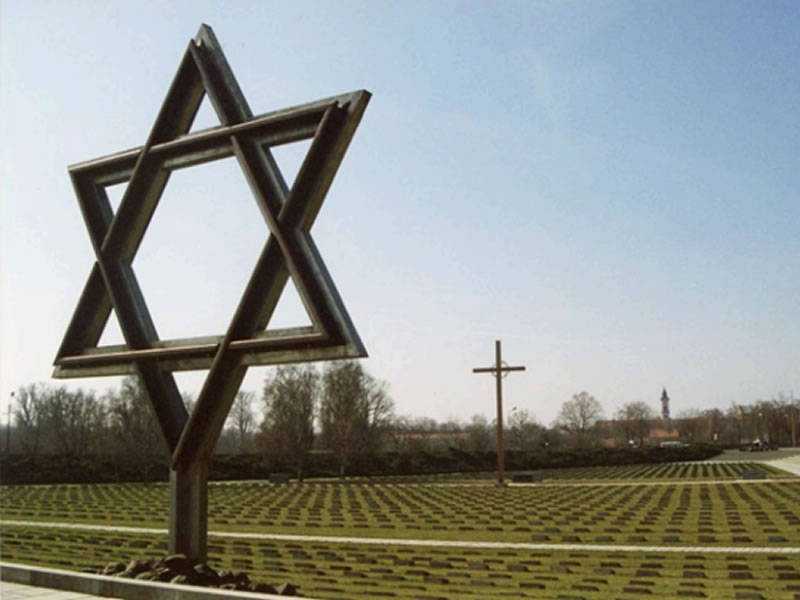
In December 1941, Gideon Klein, one of Europe’s most gifted young composers, was imprisoned in the Theresienstadt ghetto. Even there, under the most oppressive of circumstances, he continued to compose music of remarkable originality and humanity. His Duo for Violin and Cello remained unfinished when at the age of only twenty-five, he was sent to Auschwitz and murdered in January 1945. Like countless other voices extinguished by the Holocaust, his creative life was cut short before it had reached its full promise.
More than eighty years later, two chamber music festivals, separated by half the world but united by a common purpose, resolved to give Klein’s final work the ending that history denied him. The Australian Festival of Chamber Music joined with the Brundibár Arts Festival in Newcastle upon Tyne to commission Australian composer Lee Bradshaw to complete the unfinished score. It was an inspired collaboration: conceived jointly by festivals in England and Australia, inspired by the work of a Czech Jewish composer, completed by an Australian composer and performed by musicians from several nations. It demonstrated that Klein’s artistic legacy belongs not to one country or one community, but to all who believe that great art transcends the hatred that sought to destroy it.
The commission was given additional authenticity by the musicians who brought it to life. Alexandra Raikhlina, founder and Artistic Director of the Brundibár Arts Festival, and Jack Liebeck, Artistic Director of the Australian Festival of Chamber Music, were not merely the artistic leaders of the two collaborating festivals. Both performed in the world premiere in Newcastle upon Tyne and again in its Australian presentation in Cairns. Their personal involvement underscored that this was far more than another festival commission. It was a shared commitment to restoring, as faithfully and respectfully as possible, the interrupted voice of Gideon Klein and ensuring that his music would continue to speak to new audiences across generations and across continents.
The emotional journey began even before the first notes were played. The audience listened to the recorded voice of an Auschwitz survivor who later made Australia home, a deeply moving reminder that the Holocaust is not merely European history but part of Australia’s own story through those who survived and rebuilt their lives here. It is also closer to us than we sometimes imagine. Among the musicians bringing this commission to life was a performer whose own great-grandfather perished at Auschwitz. That quiet, unspoken connection lent the performance an authenticity and emotional depth that no programme note could ever convey.
Contemporary music is usually too contemporary for me. Listening to it can be a chore rather than a pleasure. Lee Bradshaw’s completion of Klein’s unfinished work achieved something quite different. Rather than attempting to imitate Klein’s voice, it honoured it with sensitivity and restraint. The transition from Klein’s surviving manuscript to Bradshaw’s own music felt entirely natural, less like the arrival of another composer than the continuation of an interrupted conversation across eight decades. It was a rare example of new music that spoke directly to both the intellect and the emotions.
The performance also served as a timely reminder that the lessons of the Holocaust are not confined to history. The antisemitic attack at Bondi last December shocked Australians and demonstrated that hatred towards Jewish people is not merely something we read about in history books. Yet only a few months later, it is already beginning to fade from public consciousness. That is precisely why works such as this matter. They remind us that remembering is an active responsibility, not an annual ceremony. Condemning antisemitism without reservation should never prevent us from feeling compassion for innocent Palestinian civilians caught in the tragedy of war. The two are not contradictory. Indeed, the enduring lesson of Gideon Klein’s music is not that our sympathies should be divided, but that our common humanity should never be.
The Australian Festival of Chamber Music deserves enormous credit for including this remarkable commission in its programme. Great festivals should certainly entertain, but from time to time they should also challenge, educate and remind us of the values that bind civilised societies. On this occasion the festival achieved all three. As the final notes faded away, it was impossible not to feel that, in some small measure, Gideon Klein had been granted the ending that history denied him. More importantly, his voice continues to be heard, reminding each new generation that remembrance is not a passive act but a conscious choice.
Sorry, the comment form is closed at this time.