
20 Nov Hate Has No Home Here: Why Australia Needs Stronger Laws Against Antisemitism

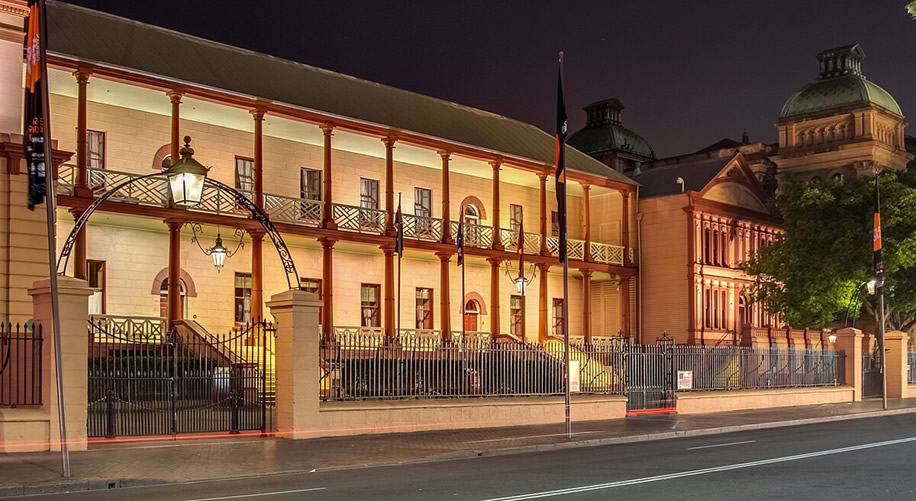
The images from Macquarie Street last weekend were as disturbing as they were familiar. Outside the New South Wales Parliament, a group of black-clad men calling themselves the National Socialist Network raised their arms, chanted “blood and honour,” and invoked the rhetoric of Hitler’s youth movement. It was the kind of scene we once believed belonged only to history books.
NSW Premier Chris Minns has now promised new laws to outlaw Nazi slogans and gestures, saying we need “bigger, bolder, bright lines between hate speech and free speech.” He’s right. The line has blurred far too long. The promise of the post-war generation was never again. For that promise to hold, words must have consequences.
Australia already bans Nazi symbols – the swastika and the SS bolts – but not the words, chants, or gestures that carry the same venom. The result is a loophole large enough for extremism to march through. When “blood and honour” can echo on the steps of Parliament without consequence, something in our legal and moral guardrails has failed.
This weekend’s rally didn’t occur in isolation. It followed months of antisemitic incidents since the Hamas atrocities of October 7, 2023 – the Opera House protest, vandalised synagogues, threats against Jewish schools, and the online harassment of politicians such as Allegra Spender and Kellie Sloane. Each episode chips away at Australia’s reputation as a tolerant society.
My forthcoming book, Terms of Belonging, argues precisely for what Premier Minns has now foreshadowed: stronger, clearer laws to protect our social fabric from the corrosive spread of antisemitism and hate-based ideologies. Free speech is essential, but it is not absolute. A democracy that cannot defend its citizens from intimidation has already ceded part of its freedom.
Yet it isn’t only victims who need stronger laws – it’s also those tasked with enforcing them. Police officers on the ground have been caught in a grey zone. Current legislation against “incitement” and “vilification” often demands proof of direct intent to cause harm, a bar that’s difficult to meet in real-time protests or online rants. Officers can remove people for disorder but not always charge them for hate. That ambiguity ties hands at the very moment when decisive action could prevent escalation.
Moderate Islamic leaders face their own challenge. Most of Australia’s imams and Muslim organisations have repeatedly condemned antisemitism and extremism, but without firm legal backing their voices are easily drowned by agitators who exploit the same legal loopholes time and time again. Clearer, uniform national laws would strengthen those moderates, giving them the moral and legal support to say, “This crosses the line.”
Antisemitism does not begin with violence; it begins with permission – the unchallenged joke, the tolerated slur, the chant dismissed as “just words.” Once those words go unpunished, they grow teeth. After the Sydney Opera House rally, the public watched as ministers and police officials struggled to define what had happened. Some spoke of “free speech” and “operational decisions,” others of “hate speech” and “community sensitivities.” The result was paralysis – a display of deference rather than direction at the very moment leadership was needed. For many Jewish Australians, the mixed messages reinforced the sense that even open expressions of antisemitism could be rationalised. The laws now under discussion in New South Wales are not an overreach; they are a recognition that history warns us what happens when hatred is allowed to disguise itself as opinion.
There will be those who object, invoking free speech or warning of censorship. Yet freedom of expression has always carried a reciprocal duty: not to incite harm. The right to speak ends where another’s safety begins. Australia’s racial vilification statutes already recognise this principle; what is missing is the courage to enforce it consistently when antisemitism is the target.
For decades, Australia prided itself on being largely untouched by the extremes of Europe’s twentieth-century politics. But the global currents of grievance and conspiracy that flow online know no borders. The young men who donned black uniforms in Sydney did not invent their hatred – they imported it. They are the local echo of a worldwide resurgence in neo-Nazi and Islamist propaganda, often intertwined in their contempt for Jews and liberal democracy alike.
Premier Minns’s move deserves bipartisan backing. So too does a federal response to ensure uniform laws across the country. Otherwise, we risk the absurd situation where a Nazi salute is illegal in Victoria but lawful in New South Wales until the legislation catches up.
The debate that will now unfold in Parliament should not be framed as Left versus Right, or liberty versus control. It is a test of whether Australia still believes that civility and tolerance are worth defending in law as well as spirit.
The men who rallied outside Parliament sought attention – and in that sense, they’ve done us a service. They’ve reminded us that hatred is never “gone,” only dormant, waiting for complacency to clear a path.
As Terms of Belonging argues, belonging in Australia has always carried an unspoken compact: freedom within boundaries, rights balanced by responsibilities. Outlawing Nazi slogans isn’t about silencing opinion; it’s about reaffirming the boundaries that keep our society decent and safe for all.
Roz Wilson
Posted at 10:10h, 25 NovemberWonderfully outlined David! The cracks are widening in so many ways.
Looking forward to the book!