


11 Nov Australia Used to be Good at Engineering

When a wind turbine at Victoria’s Berrybank Wind Farm collapsed earlier this year, it was easy to dismiss the scene – twisted steel and shattered blades – as a freak event. But a few weeks later, a blade broke at Queensland’s new MacIntyre Wind Farm, barely two months after it joined the grid. Around the same time, the state’s Borumba Pumped Hydro Project was hit by a four-billion-dollar cost blowout and a three-year delay. Add the escalating budgets of Snowy 2.0 and the Tasmanian Marinus Link, and a pattern starts to emerge: ambition outrunning judgement. These projects were meant to make renewables reliable. Instead, they reveal how Australia’s energy policy has drifted from disciplined planning to wishful thinking.
When Snowy 2.0 was announced in 2017, it was billed as the natural successor to the post-war Snowy Scheme – a “nation-building” sequel for the climate era. It began at about two billion dollars; current estimates exceed twelve billion, with completion still years away. What began as an engineering challenge to store surplus renewable energy has become a metaphor for over-reach and under-delivery. Queensland’s Borumba Pumped Hydro Project is no different: conceived as a giant “battery” for the state’s renewable grid, it has already exceeded eighteen billion dollars and is sliding further behind schedule. Across Bass Strait, the Marinus Link – once a three-billion-dollar dream to export Tasmanian hydro power – is now heading for five billion and facing renewed economic scrutiny. Each project was sold as essential to making renewables dependable. All now stand as warnings of what happens when feel good politics drives engineering rather than the other way around.
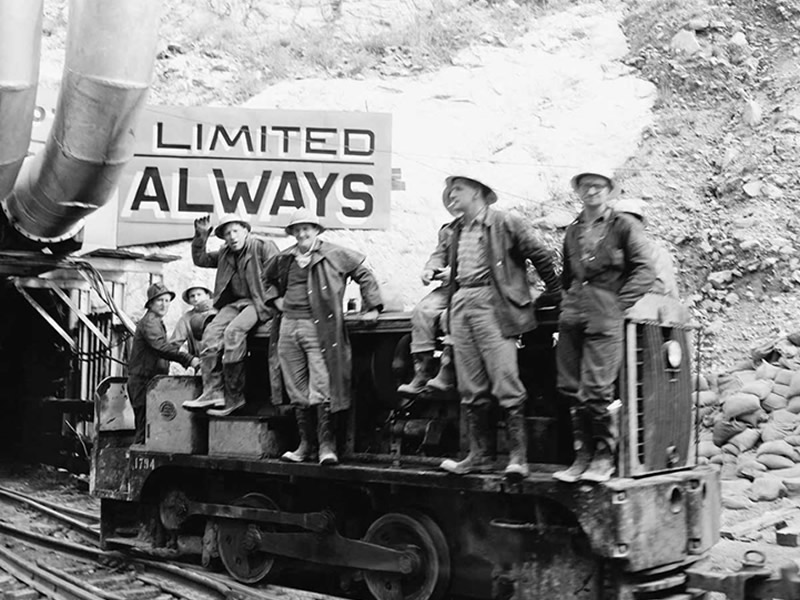
It wasn’t always so. The original Snowy Mountains Hydro-Electric Scheme, launched in 1949, was rooted in purpose. Post-war Australia needed electricity for factories and irrigation for the inland. The project delivered both. Over twenty-five years, a hundred thousand workers from more than thirty countries built sixteen dams, seven power stations and 145 kilometres of tunnels. It came in on budget, worked as intended, and still powers homes today. The Snowy Scheme was bold, but it was also rational – designed by engineers, justified by economics, and executed with discipline. The difference between the two Snowys captures a larger loss: the shift from reasoned ambition to moral enthusiasm, from building what we need to announcing what sounds good.
Across a decade, the Commonwealth has spent roughly thirty billion dollars on renewable-energy subsidies – certificates under the Renewable Energy Target, rooftop-solar rebates, grants from the Australian Renewable Energy Agency, and cheap finance through the Clean Energy Finance Corporation. With new commitments in the 2024 Budget, that figure will rise well beyond fifty billion. Yet the electricity grid remains fragile, and the promise of affordable, reliable clean power feels as distant as ever. For perspective, the CSIRO’s own GenCost 2023–24 report estimates a modern 1,000 megawatt nuclear plant would cost about 8.6 billion dollars to build. By that measure, the funds already spent on renewable subsidies alone could have financed three to four large nuclear power stations – reliable, zero-carbon generators with lifespans of sixty years or more. Even allowing for the “first-of-a-kind” premium that Australia would face, the comparison is stark: tens of billions expended, and still no secure baseload supply.
Renewable energy has a role to play. No one disputes the value of wind and solar where they make economic sense. Rooftop solar has worked well. But Australia’s transition strategy has become a closed loop: build intermittent generation, then spend more to compensate for its intermittency. Each new problem spawns another subsidy, another scheme, another grand project to steady a system that should never have been destabilised in the first place. The real issue isn’t renewables themselves – it’s the absence of balance. We’ve treated technology choice as a moral test rather than a practical decision. Nuclear power, which supplies around seventy percent of France’s electricity and anchors grids across Asia, remains prohibited here by legislation passed in the 1990s. We export uranium to the world yet forbid ourselves from using it. For a country that once prided itself on pragmatic innovation, this is a peculiar kind of paralysis.
Imagine instead that the billions spent on subsidies and “firming” schemes had been invested in a small fleet of modern nuclear plants – perhaps a combination of large-scale reactors and emerging small-modular designs. They could have provided continuous, carbon-free power to underpin renewables, electrify industry, and decarbonise transport. Such an approach wouldn’t have replaced solar rooftops or regional wind farms; it would have complemented them, giving Australia a resilient, low-emission grid rather than a fragile one. The technology is proven, the fuel abundant, and the regulatory path – though long – is clear if the political will exists.
The first Snowy Scheme was not flawless, but it was grounded in reality: defined goals, clear accountability, and the humility to let engineers lead. Its successors – Snowy 2.0, Borumba, and Marinus – began with slogans, not blueprints. There is a quiet sadness in that contrast. We once built projects that reflected who we were – practical, resourceful, confident in our capacity to solve real problems. Now we build monuments to what we wish to be and often struggle to finish them.
Australia doesn’t need another energy revolution. It needs a return to realism: plan before announcing, measure before spending, and choose technologies that are proven, scalable and enduring. Nuclear power deserves a place in that conversation – not as an ideological gesture, but as a reliable foundation for the clean-energy future we keep promising ourselves. The machinery of the original Snowy still hums beneath the mountains after seventy years. That is what sound engineering looks like. It’s not too late to rediscover it.
Sorry, the comment form is closed at this time.